September 10, 2026 · Erik Rumbaugh
Why Paracoccus is Every Wastewater Operator’s Secret Weapon for Nitrogen, Odor, and VFA Control
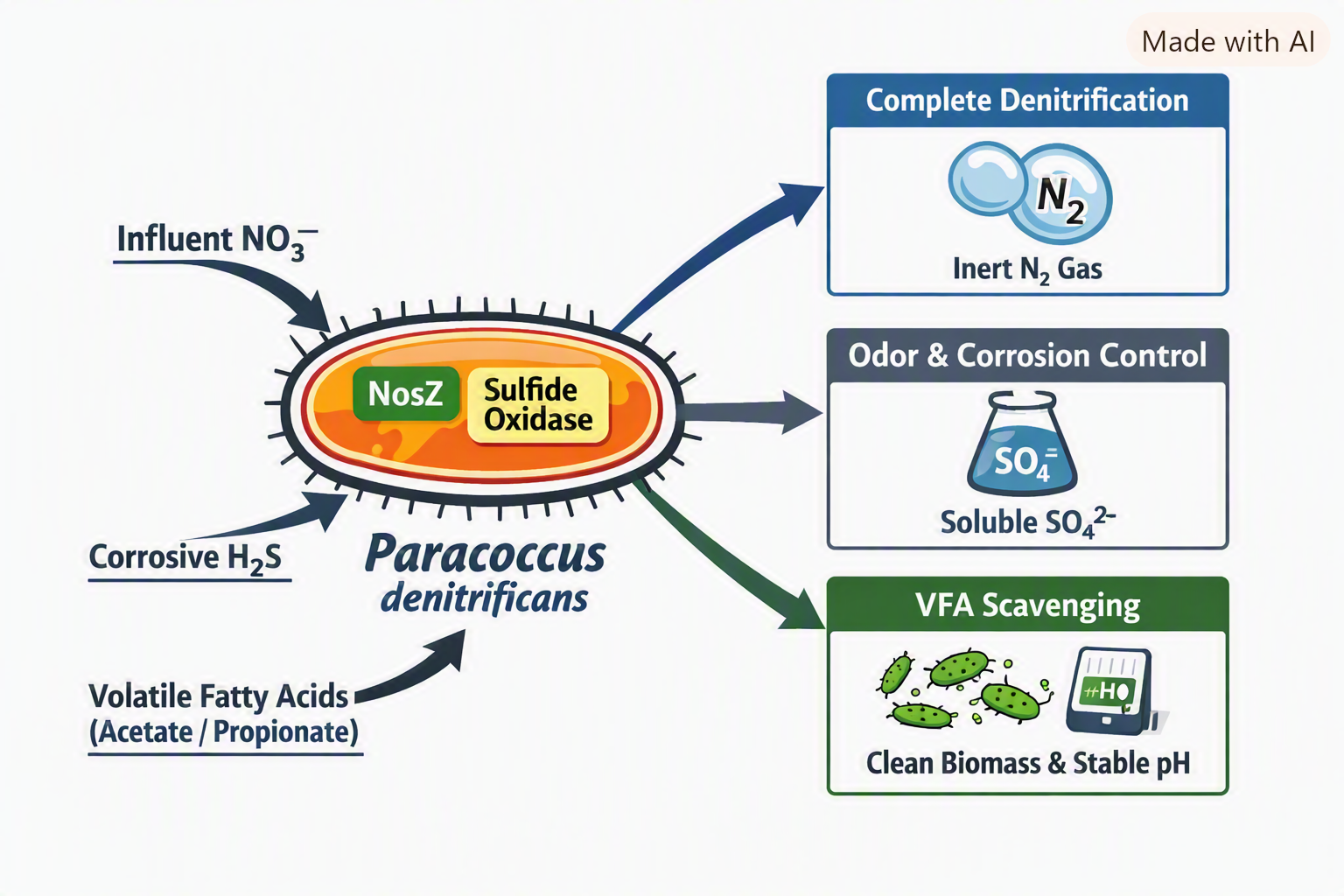
Often, system stability comes down to functional microbial diversity. If you’re managing fluctuating influent loads, stringent nitrogen limits, or odor issues, there’s one workhorse microbe you want thriving in your biological system: Paracoccus species (most notably P. denitrificans or P. pantotropha).
These facultative, gram-negative bacteria are biological multitaskers. Capable of switching seamlessly between autotrophic and heterotrophic growth, Paracoccus addresses three critical plant challenges simultaneously:
Complete Denitrification (Zero Greenhouse Gas Off-Gassing)
Many denitrifying bacteria drop the ball midway through the nitrogen pathway, releasing nitrous oxide —a greenhouse gas 300x more potent than carbon dioxide.
Paracoccus possesses the full enzymatic kit, including nitrous oxide reductase , to take nitrate completely down to inert nitrogen gas:

Operator Advantage: It rapidly toggles between aerobic respiration and anoxic nitrate reduction, making it highly resilient in variable-DO systems like SBRs or anoxic selector zones.
Biological Sulfide Oxidation (Odor & Corrosion Prevention)
Hydrogen sulfide isn’t just an odor complaint waiting to happen; it corrodes concrete infrastructure and poisons biological flocs.
-
Natural Scrubber: Under both aerobic and anoxic conditions, Paracoccus oxidizes reduced sulfur compounds into stable, soluble sulfate.
-
Autotrophic Denitrification: Paracoccus can pair sulfide oxidation directly with nitrate reduction. This allows plants to knock out sulfides and nitrates simultaneously in a single anoxic zone—without buying extra supplemental carbon.
Rapid VFA Consumption (pH & Sludge Settleability)
Short-chain volatile fatty acids (VFAs) like acetate, propionate, and butyrate can cause rapid pH drops and trigger filamentous bulking if left unchecked.
-
Paracoccus uses VFAs as an ideal carbon source to fuel heterotrophic growth and denitrification.
-
Scavenging residual VFAs in secondary aerated zones stabilizes system pH and promotes dense, well-settling flocs.
The Bottom Line for Operators & Engineers
| Target Process | Microbial Action | Operational Result |
|---|---|---|
| Nitrogen Removal | Complete reduction of |
Total N compliance without |
| Sulfide Control | Converts toxic |
Eliminates odors and protects assets from corrosion |
| VFA Management | Rapidly metabolizes short-chain organic acids | Prevents pH drops and controls filamentous bulking |
Supporting a robust Paracoccus population in your activated sludge or biofilm system gives your plant an essential metabolic buffer against volatile influent streams.