October 21, 2026 · Erik Rumbaugh
Alkalinity vs pH: The Stability Factor Behind Nitrification
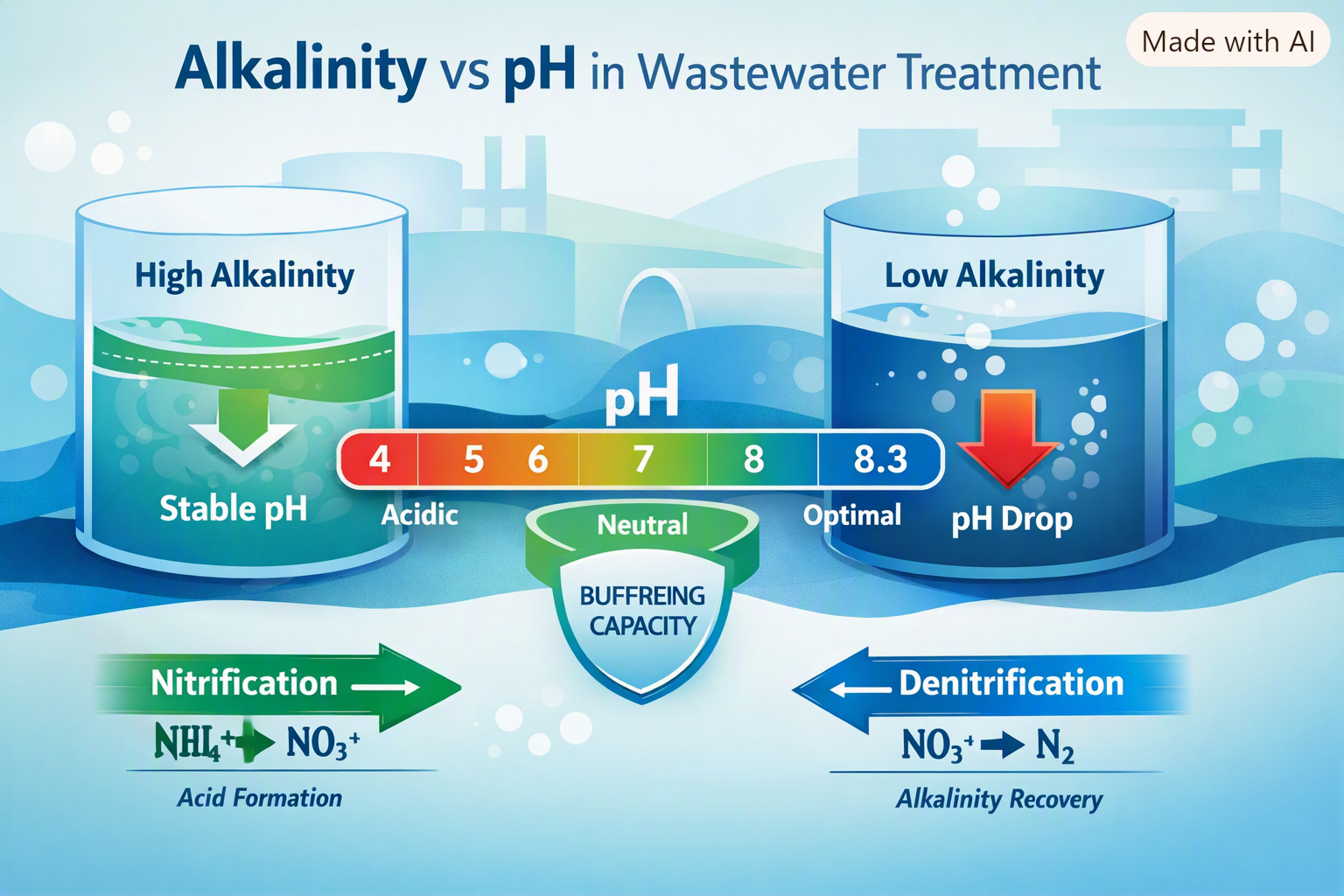
In wastewater treatment, pH is the most common reported value, but alkalinity is extremely important for nitrifying systems. If you’re running biological nutrient removal, understanding why alkalinity is just as important as pH in maintaining stable removal of ammonia and nitrite.
pH = the reading. Alkalinity = the longer term bufffer.
pH tells you the current acidity. Alkalinity tells you how much acid the system can absorb before pH collapses.
A system can look “fine” at pH 7.2 while quietly losing hundreds of mg/L of alkalinity. When the buffer finally gives out, nitrification drops off a cliff.
Why buffering capacity matters for nitrifiers
Ammonia oxidation produces acid. AOB generate H⁺ as they convert NH₄⁺ → NO₂⁻, and without alkalinity to neutralize those ions, pH falls below the nitrifier operating zone.
Nitrification sweet spot: ~7.0–8.3. Going lower than 7.0 you see increased amounts of nitrous acid and above 8.3 you start to have free ammonia toxicity issues. (For those wanting to know more about Free Ammonia vs Free Nitrous Acid, I have a spreadsheet available).
The alkalinity math operators should know
Nitrification consumes: 7.14 mg alkalinity (as CaCO₃) per mg NH₃‑N oxidized
Denitrification returns: 3.57 mg alkalinity (as CaCO₃) per mg NO₃‑N reduced
Net effect in full BNR: A 3.57 mg/L alkalinity loss for every mg NH₃‑N treated.
If denitrification is carbon‑limited or incomplete, alkalinity depletion accelerates.
Operational implications
- Maintain ≥80–100 mg/L alkalinity in aeration
- Watch for ammonia creep → early alkalinity warning
- Watch for nitrite accumulation → pH slipping
- Supplement alkalinity for high‑ammonia or low‑buffer influent
- Ensure denitrification is carbon‑sufficient to recover alkalinity
Bottom line
pH tells you where you are. Alkalinity tells you whether you can stay there.