October 9, 2026 · Erik Rumbaugh
Unlocking the Science of Non-filamentous Bulking: 5 Primary Triggers for Excess LB-EPS Secretion in Wastewater Treatment
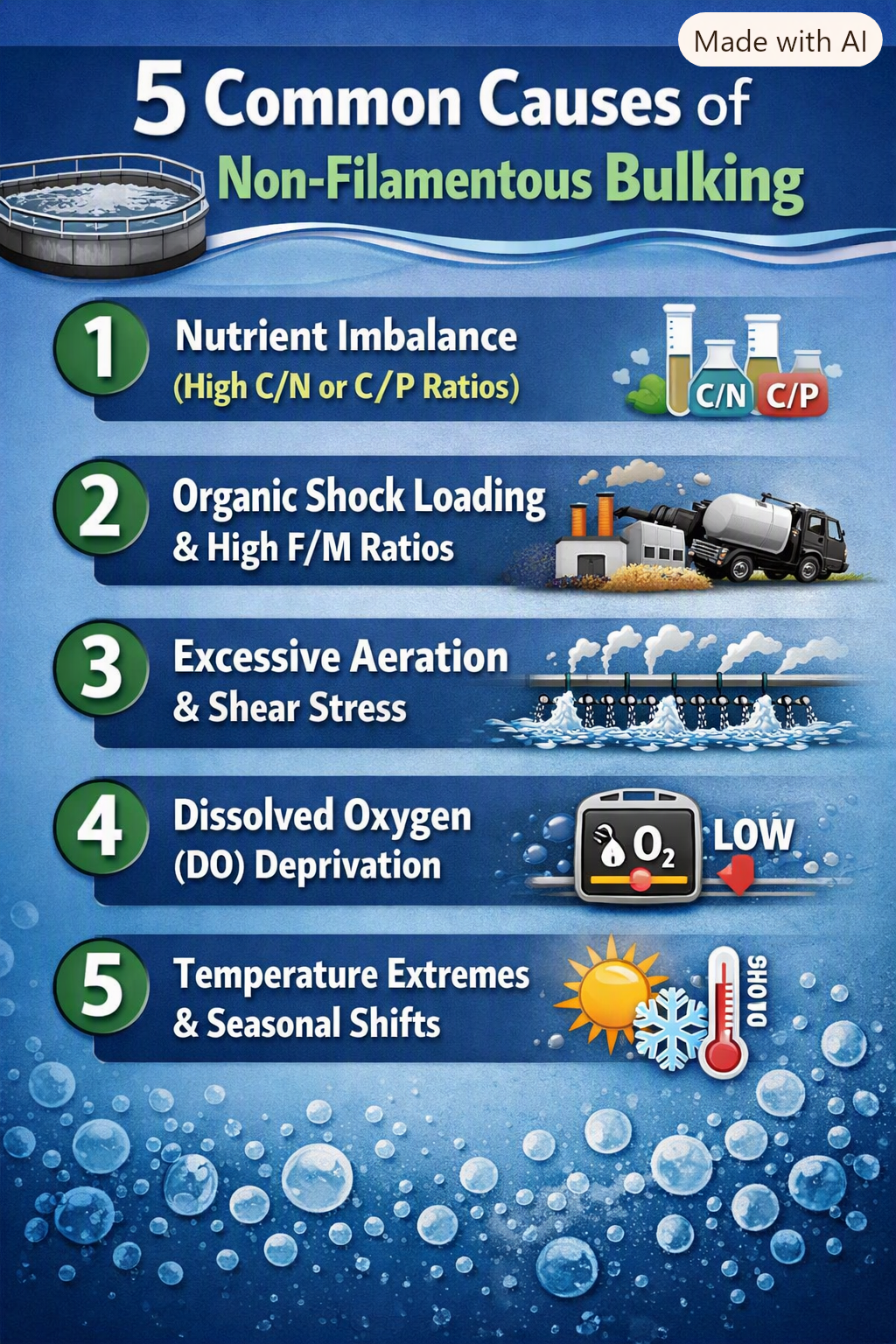
Extracellular Polymeric Substances (EPS)—specifically Loosely Bound Extracellular Polymeric Substances (LB-EPS)—play a critical role in bioflocculation, sludge settling, and membrane bioreactor (MBR) performance. While baseline EPS acts as a natural biological glue holding bacterial flocs together, excessive secretion of LB-EPS causes major operational challenges, including poor sludge dewaterability, severe membrane fouling, and elevated effluent turbidity.
Understanding what causes microorganisms to overproduce these biopolymers is key to maintaining system stability. Here is a deep dive into the five primary environmental and operational triggers responsible for excess LB-EPS production in wastewater treatment systems.
1. Nutrient Imbalance (High C/N or C/P Ratios)
Starting with the most well-known but least common cause of EPS bulking. When incoming wastewater carries an excess of organic carbon (high Chemical Oxygen Demand, or COD) relative to essential nutrients like nitrogen or phosphorus, bacterial growth dynamics shift drastically. Without sufficient nitrogen or phosphorus to build proteins and nucleic acids, microbes cannot utilize the surplus carbon for cell division.
Instead, bacteria resort to overflow metabolism. Rather than storing the extra energy internally, they synthesize and secrete massive quantities of hydrophilic polysaccharides into the liquid medium as LB-EPS. This sticky polymer matrix inflates reactor viscosity and hinders solid-liquid separation.
2. Organic Shock Loading & High F/M Ratios
Sudden spikes in organic loading rates create high Food-to-Microorganism (F/M) ratios that easily overload the metabolic capacity of the existing biomass. When flooded with readily biodegradable organic matter, bacterial communities cannot convert the sudden carbon influx into structured cell mass quickly enough.
In response to this rapid metabolic surge, microbes excrete unorganized, loosely bound extracellular polymers directly into the liquid phase rather than forming cohesive, stable flocs. This unanchored LB-EPS increases colloidal dispersion and destabilizes the activated sludge matrix.
3. Excessive Aeration and Shear Stress
In Membrane Bioreactors (MBRs) and highly agitated aeration basins, high aeration rates are routinely applied to scour membrane surfaces and maintain dissolved oxygen levels. However, extreme hydrodynamic shear forces can backfire.
Extreme shear stress physically breaks apart fragile biological flocs, stripping away the protective outer layer of Tightly Bound EPS (TB-EPS). Once sheared off, this structural layer is converted into dispersible LB-EPS and colloidal particles. This process degrades floc size, increases fouling propensity on membrane surfaces, and raises overall liquid-phase viscosity.
4. Dissolved Oxygen (DO) Deprivation
Sustained hypoxic conditions or wide DO fluctuations severely disrupt oxidative phosphorylation within bacterial cells. Deprived of optimal oxygen levels, microbes experience physiological stress and alter their metabolic excretions.
Under low DO stress, bacteria excrete highly viscous, sticky polymers into their surroundings. This increased liquid phase viscosity creates a dangerous feedback loop: high viscosity further impedes oxygen transfer efficiency from aeration bubbles into the liquid, compounding DO starvation and accelerating polymer secretion.
5. Temperature Extremes and Seasonal Shifts
Temperature plays a dual role in controlling LB-EPS levels in bioreactors through biological enzymatic activity and physiological stress responses:
-
Cold Wastewater Temperatures: Lower temperatures slow down the rate of enzymatic degradation that naturally breaks down extracellular polymers, leading to a steady accumulation of EPS within the reactor.
-
Rapid Thermal Shifts: Sudden seasonal transitions or rapid temperature changes trigger stress responses in bacterial cell walls, prompting microbes to release elevated levels of protective polymers.
By monitoring nutrient ratios, controlling organic shock loads, optimizing aeration intensity, maintaining stable DO concentrations, and accounting for seasonal temperature changes, plant operators can proactively suppress excess LB-EPS secretion. Managing these underlying physiological stress factors ensures better floc stability, improved membrane permeability, and overall smoother plant performance.