September 3, 2025 · Erik Rumbaugh
💧 Why Influent TKN Matters More Than Just Ammonia in Wastewater Treatment
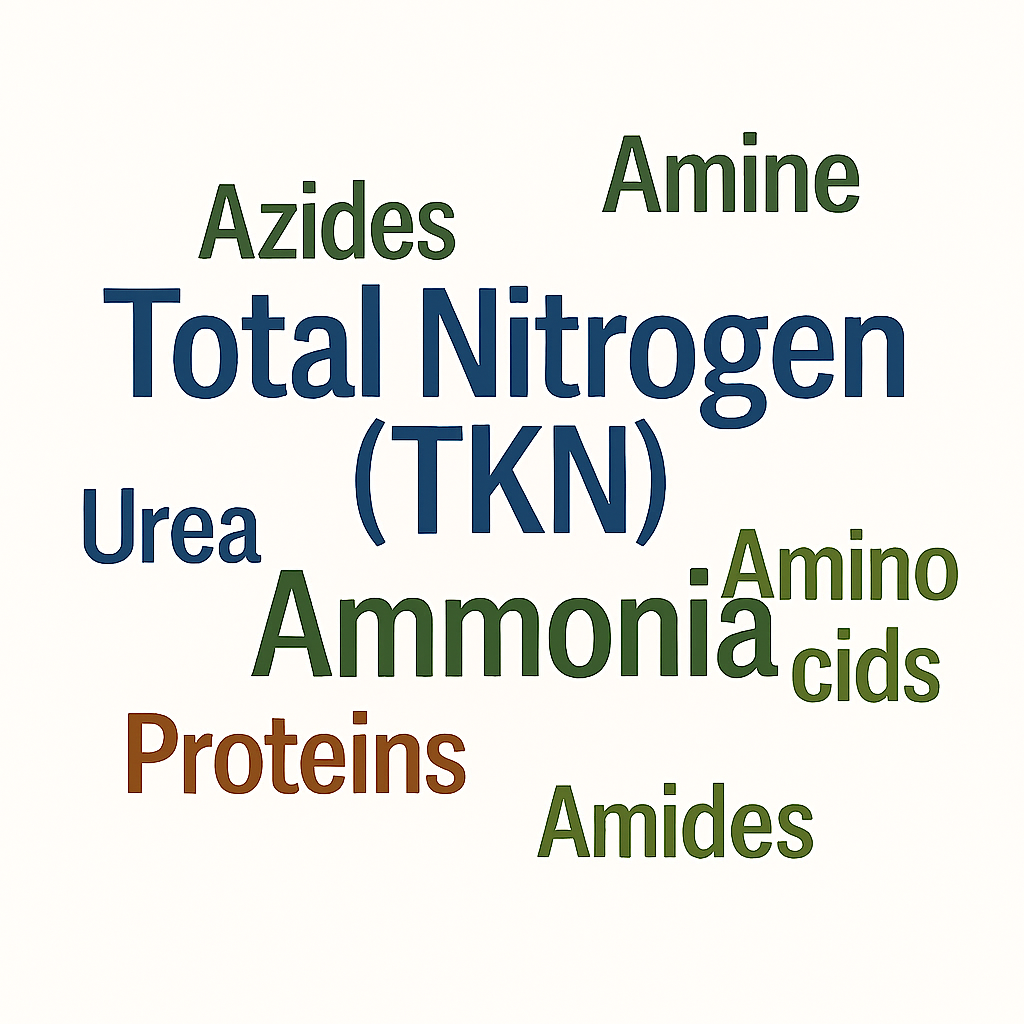
When it comes to nitrogen monitoring in wastewater, ammonia often steals the spotlight. But if you’re only tracking ammonia, you’re missing a critical piece of the puzzle: Total Kjeldahl Nitrogen (TKN). TKN includes both ammonia and organic nitrogen—and understanding both is essential for optimizing treatment performance, anticipating nitrification loads, and staying compliant.
🧪What Is TKN, Really?
TKN is the sum of:
- Ammonia (NH₃/NH₄⁺) – the inorganic form of nitrogen, immediately available for nitrification.
- Organic Nitrogen – nitrogen bound in proteins, amino acids, urea, and other compounds.
While ammonia is directly measurable and immediately relevant to nitrification, organic nitrogen is a latent load —it doesn’t stay organic forever.
🔄The Hidden Journey: Organic Nitrogen → Ammonia
Organic nitrogen undergoes ammonification , a microbial process where heterotrophic bacteria break down complex nitrogenous compounds into ammonia. This conversion is:
- Biologically driven – dependent on microbial activity.
- Time-sensitive – it doesn’t happen instantly.
Factors influencing the rate of conversion:
- Temperature – warmer conditions accelerate microbial metabolism.
- Retention time – short hydraulic retention may not allow full conversion.
- Carbon availability – microbes need energy to break down organics.
- Solids concentration – higher suspended solids often mean more organic nitrogen.
This means that organic nitrogen can become ammonia hours or even days later , often after the influent has passed the headworks. If you’re only measuring ammonia, you’re flying blind to this delayed nitrogen load.
⏱Why Time Matters
Let’s say your plant receives influent with:
- 15 mg/L TKN
- 5 mg/L ammonia
That leaves 10 mg/L of organic nitrogen. If your process doesn’t account for the delayed release of ammonia , you risk:
- Underestimating nitrification demand
- Overloading downstream biological processes
- Unexpected spikes in effluent ammonia
This is especially critical in low HRT systems , side-stream treatment , or plants with variable loading (e.g., industrial dischargers or storm events).
📈Operational Implications
Monitoring influent TKN gives operators:
- A complete nitrogen profile —not just what’s immediately reactive.
- Insight into future ammonia loads —essential for aeration control and nitrifier health.
- Better process modeling —especially for plants using advanced nutrient removal or real-time control systems.
✅Takeaway
Ammonia tells you what’s happening now.
TKN tells you what’s coming next.
If your plant’s nitrogen strategy is built on ammonia alone, it’s time to upgrade your monitoring game. TKN isn’t just a lab metric—it’s a predictive tool for smarter, more resilient wastewater treatment.