July 23, 2026 · Erik Rumbaugh
Why Bio-P Systems naturally host more Filamentous Bacteria than Conventional Activated Sludge
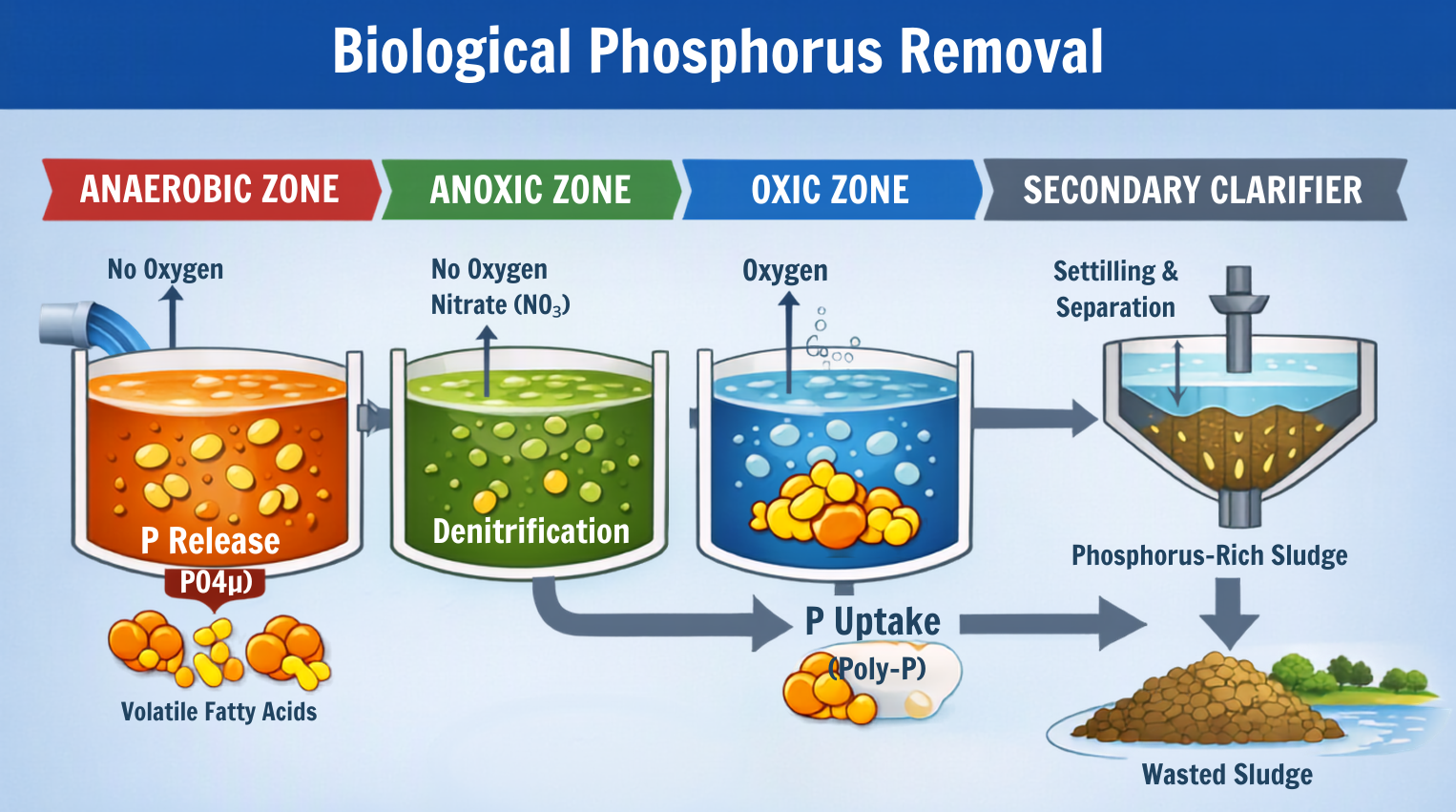
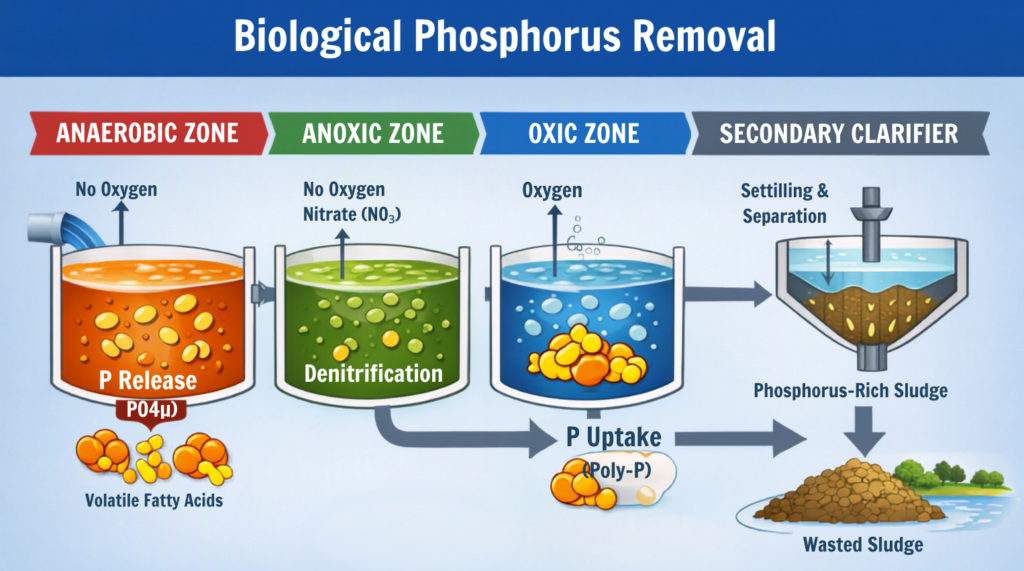
Wastewater treatment plants with Enhanced Biological Phosphorus Removal (EBPR), operate with anaerobic, anoxic and aerobic zones carefully balanced to maintain vital PAO populations. Microbial Community Analysis (MCA) testing of EBPR facilities has found that the normal population of known filamentous bacteria is often higher than is found in non-EBPR facilities.
In conventional activated sludge, filaments are almost universally treated like uninvited party crashers. Too many of them cause sludge bulking (where floc won’t settle in the clarifier) or foaming on the surface.
When a plant is operated to maximize Bio-P organisms, seeing higher background levels of filamentous organisms may not be a problem. It is an inevitable byproduct—and in many ways, an operational footprint—of the very process you set up to remove phosphorus.
EBPR Creating Ideal Filament Conditions
To get Polyphosphate Accumulating Organisms (PAOs) to uptake massive amounts of phosphorus, you have to subject them to a specific process configuration: an alternating anaerobic-aerobic selector system.
In the anaerobic zone, PAOs take up volatile fatty acids (VFAs) like acetate and store them as polyhydroxyalkanoates (PHAs), breaking down internal polyphosphate bonds for energy and releasing ortho-phosphate into solution. Then, when they hit the aerobic zone, they consume those stored PHAs for growth and suck up far more phosphorus than they released.
Here’s the catch: That exact environment happens to be ideal real estate for specific filamentous bacteria.
- VFAs at the Front End: Certain filaments (such as Type 021N , Thiothrix , and Microthrix parvicella) thrive on the elevated volatile fatty acid concentrations present in anaerobic selector zones.
- Long Chain Fatty Acids (LCFAs): Lipids and fats break down into LCFAs, which Microthrix parvicella loves to feast on under anaerobic and anoxic conditions.
- Alternating Redox Zones: Moving sludge back and forth between zero-oxygen and high-oxygen environments creates niche survival strategies that favor robust, long-chain organisms alongside PAOs.
Filaments Aren’t the Enemy (Until They Outgrow the Floc)
In classical wastewater design, operators strive for smooth, tight globular flocs. But a completely filament-free floc is quite fragile.
Think of activated sludge floc like reinforced concrete:
- Floc-forming bacteria (like Zoogloea) act as the concrete.
- Filamentous bacteria act as the rebar extending through the matrix.
In a Bio-P system, having a moderate baseline population of filaments gives the floc a strong physical backbone. This “backbone” catches smaller particles as the sludge settles, producing exceptionally clear final effluent.
Bulking vs. Presence: Knowing the Difference
There is a huge difference between having filamentous bacteria present and suffering from filamentous bulking.
| Condition | Microscopic Reality | Operational Result | Action Required? |
|---|---|---|---|
| Healthy Bio-P Baseline | Filaments are contained mostly within the floc structure acting as rebar. | Sludge Volume Index (SVI) stays in a manageable range (e.g., 100–150 mL/g). Good settling, clear effluent. | No. System is operating normally. |
| Filamentous Bulking | Filaments bridge extensively between individual flocs, creating an open net. | SVI spikes (>200 mL/g). Sludge blanket rises in final clarifiers, risking solids loss. | Yes. Chlorination, DO adjustments, or selector tuning required. |
Because Bio-P configurations continuously feed filaments their preferred food source in the anaerobic stage, your baseline filament count will almost always sit higher than in a purely aerobic conventional system.
Summary for Operations
If your Bio-P plant shows higher filament numbers under the microscope, don’t panic or rush to dose the system with chlorine.
Check your numbers first:
- Is your SVI stable?
- Is your effluent clear?
- Is your phosphorus removal hitting target?
If the answer to those three questions is yes , those filaments aren’t a sign of failure—they’re just a natural feature of running a successful biological phosphorus removal system.