September 2, 2026 · Erik Rumbaugh
Using MCA Testing to Stay Ahead of Seasonal Biology Shifts
Municipal systems behave differently as temperatures rise and fall. Even small swings — 2 – 4oC — can shift the balance between AOB , NOB , filaments , and foaming organisms. MCA data makes these shifts visible, helping operators anticipate changes before they show up in clarifiers or effluent.
Aster Bio’s MCA Testing Provides Early Warning
MCA testing gives operators a population-level view of the biological system by identifying the major microbial groups present and tracking how their relative abundance changes over time. Because the results show increases or decreases in functional groups such as AOB, NOB, PAOs, GAOs, filaments, and foaming organisms, MCA trends can reveal population drift before it becomes visible as poor settling, foam, elevated ammonia, nitrite accumulation, or unstable phosphorus removal. Used routinely, MCA becomes an early-warning tool that helps operators adjust SRT, DO, wasting, anaerobic contact, or FOG control before a seasonal or process-driven shift becomes a treatment problem.
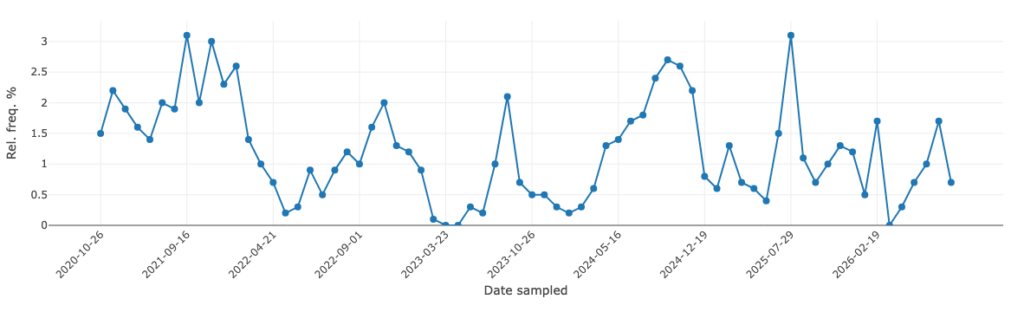
Ammonia Oxidizing Bacteria (AOB)
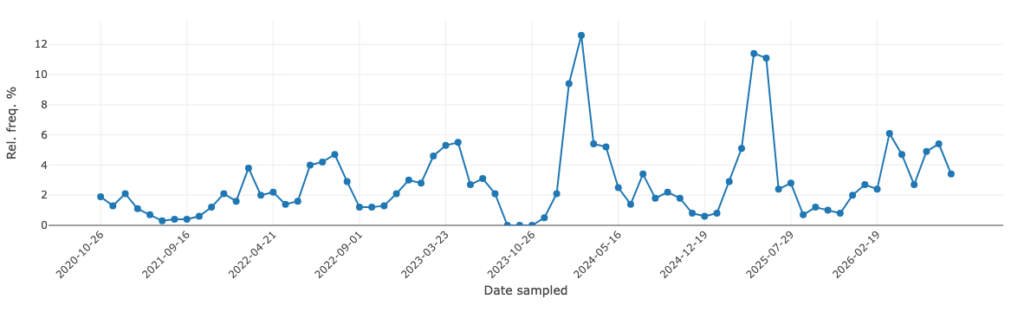
Bacteria Responsible for Foaming
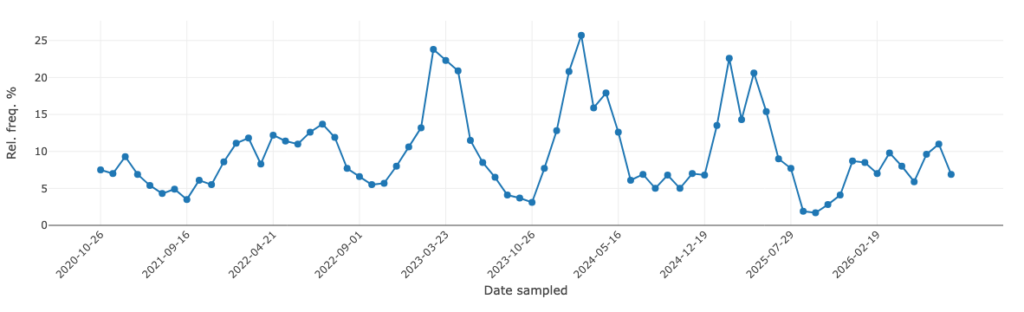
Filamentous Bacteria
Why Temperature Drives These Shifts
Temperature affects each microbial guild differently:
- Nitrifiers (AOB/NOB) have slow maximum growth rates and are highly temperature‑sensitive.
- Filaments tolerate cooler conditions better and exploit low‑F/M environments.
- Foaming organisms respond to hydrophobic cell chemistry and seasonal FOG changes.
- PAOs are resilient but can be outcompeted by GAOs in warmer, low‑strength conditions.
Even a 3°Cshift can shift the balance enough to change sludge settleability or nitrification stability.
What MCA Data Shows
Your MCA plot of AOB, NOB, foaming organisms, and filaments is essentially a seasonal fingerprint:
- Rising AOB/NOB → warm weather, strong nitrification
- Rising filaments → cooler weather, lower F/M, or stress
- Rising foaming organisms → hydrophobic species responding to temperature + FOG
- Stable PAOs → EBPR resilience across seasons
Tracking these trends helps operators anticipate clarifier performance, adjust SRT, and stabilize nutrient removal.
Operator Actions to Stay Ahead of Seasonal Shifts
- Increase SRT in winter to protect nitrifiers
- Maintain DO > 2.0 mg/L during cold months
- Strengthen anaerobic contact for PAOs when temperatures drop
- Monitor filament trends to anticipate bulking
- Track FOG loading to manage foaming organisms
- Use MCA data as an early‑warning system for seasonal changes