September 21, 2026 · Erik Rumbaugh
Foaming Filaments in Wastewater: Identification, Causes, and Control
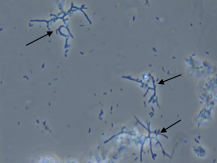
Stable dark foam in aeration basins doesn’t appear randomly — it’s frequently tied to hydrophobic filamentous bacteria. Nocardia/Gordonia and Microthrix parvicella are responsible for most biological foaming events worldwide. Their hydrophobic cell walls, filament structure, and biosurfactant production allow them to stabilize bubbles and create thick, chocolate‑milk‑colored foam that resists collapse with water sprays that control most biological foam.
To manage these organisms effectively, operators must follow a disciplined three‑step approach.
Step‑by‑Step Technical Guide
Confirm the Foam Is Biological and Filament‑Driven
Correct identification prevents wasted time on chemical antifoams or incorrect process adjustments.
- Inspect foam appearance: sticky, brown, stable, chocolate‑milk‑like foam strongly indicates Nocardia/Gordonia. Foam is not controlled with a water spray.
- Check for hydrophobic filaments under the microscope: branched filaments suggest Nocardia/Gordonia ; long, thin, non‑branched filaments indicate M. parvicella.
- Microbial Community Analysis (16s rRNA ID) testing also tracks potential foaming organisms and gives early warning before you see substantial foam problems.
- Verify staining: M. parvicella is strongly Gram‑positive and Neisser‑negative; Nocardia shows branched actinomycete morphology.
- Rule out chemical foam: surfactant spills or polymer overdosing produce white, fluffy foam that collapses quickly.
Determine Why the Filaments Are Thriving
Foaming filaments dominate only when system conditions shift in their favor.
- High FOG loading: Both Nocardia/Gordonia and M. parvicella thrive on fats, oils, and grease.
- Long sludge age (high MCRT/SRT): Slow‑growing filaments accumulate when wasting is insufficient.
- Low F/M ratio: Under low food conditions, filaments outcompete floc‑formers.
- Low DO or cold temperatures: M. parvicella thrives in low oxygen and cooler climates.
- Hydrophobic cell walls + EPS production: These traits stabilize foam by lowering surface tension and anchoring filaments to bubbles.
Apply Targeted Control Strategies
Control requires upstream process correction, not just foam suppression.
- Increase wasting to reduce sludge age and wash out slow‑growing filaments. This is the most effective long‑term fix. But remember that filaments already in the foam are hard to waste out in the WAS.
- Improve FOG removal: Tighten pretreatment, inspect grease traps, add DAF or bioaugmentation where needed.
- Enhance aeration if DO is low; M. parvicella declines under higher oxygen.
- Surface wasting or skimming: Remove floating biomass directly from the foam layer.
- Use silicone‑based defoamers (never fatty‑acid‑based) to avoid feeding filaments.
- Selective chlorination: Apply controlled chlorine mist to collapse foam and kill exposed filaments without harming mixed liquor.
- Some facilities report reduced M. parvicella foaming with polyaluminum chloride addition.
Summary
Foaming filaments are predictable once you understand their biology. Nocardia/Gordonia and Microthrix parvicella thrive under high FOG, long sludge age, low F/M, and low DO. Their hydrophobic cell walls and EPS production make foam extremely stable — but the underlying causes are controllable.
By identifying the filament, diagnosing the system conditions, and correcting upstream drivers, operators can eliminate foaming and restore stable plant performance.