
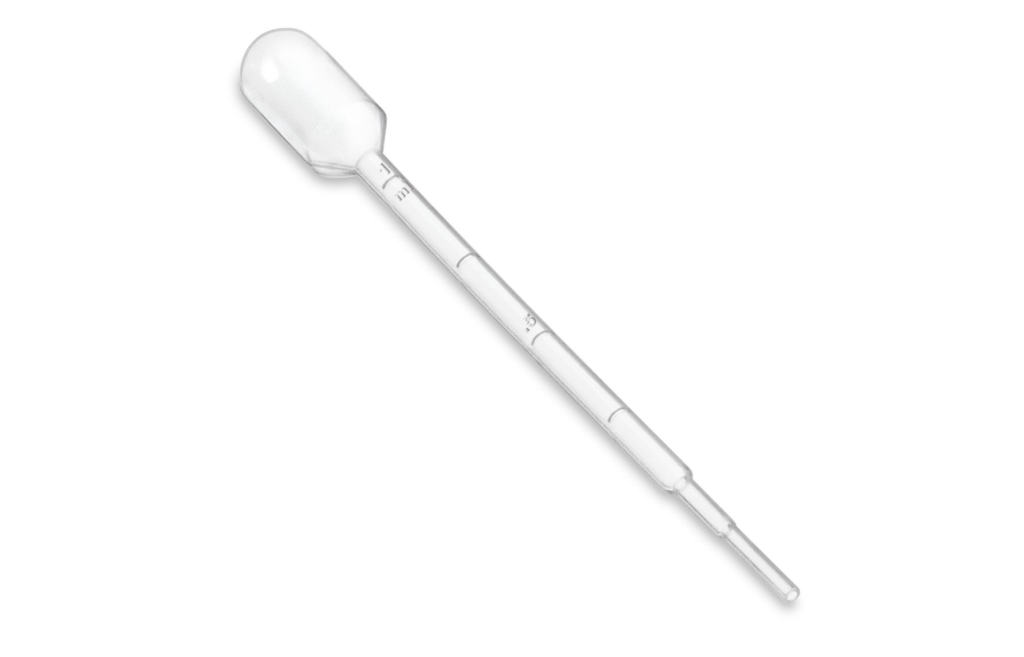
3 ml disposable transfer pipette (photo from Uline.com)
Small disposable transfer pipettes are preferred for MLSS samples because they make collection simple, clean, and consistent. They allow users to pull a small representative volume with minimal handling, reduce the risk of cross-contamination, and can be sealed easily for safe transport. Their low cost and single-use design also make them practical for routine sampling and shipping to the lab.
Prepare Your Sampling Tools
- Use a clean disposable transfer pipette.
- Wear gloves and eye protection.
- Mix or agitate the MLSS basin or sample port for a representative sample.
Collect a Few mL of MLSS
Draw a small volume of mixed liquor directly into the pipette.
- Squeeze the bulb fully before dipping.
- Submerge the tip into the MLSS.
- Slowly release pressure to pull 2–4 mL into the pipette.
- Avoid pulling excessive air bubbles.
Remove Excess Liquid
Recommended
Leave a small air pocket in the bulb to maintain oxygen and prevent pressure buildup.
- Gently squeeze out a small amount if overfilled.
- Ensure air remains in the bulb — this keeps microbes alive and prevents anaerobic shift.
Flame‑Seal the Pipette Tip
Seal the pipette tip to prevent leakage and preserve sample integrity during shipping.
- Hold the pipette horizontally.
- Pass the tip through a lighter or alcohol lamp flame.
- Allow the plastic to melt and seal closed.
- Do not overheat the bulb area.
Label and Package for Shipping
Proper labeling ensures the lab receives a viable, traceable sample.
- Write site name, date, and time on the pipette or bag.
- Place sealed pipette in a secondary container.
- Ship promptly — ideally same day.
- Keep cool but do not freeze.