
When most people think of a wastewater treatment plant, they picture heavy machinery, massive concrete tanks, and complex piping. But the most important “technology” on-site isn’t made of steel—it’s alive.
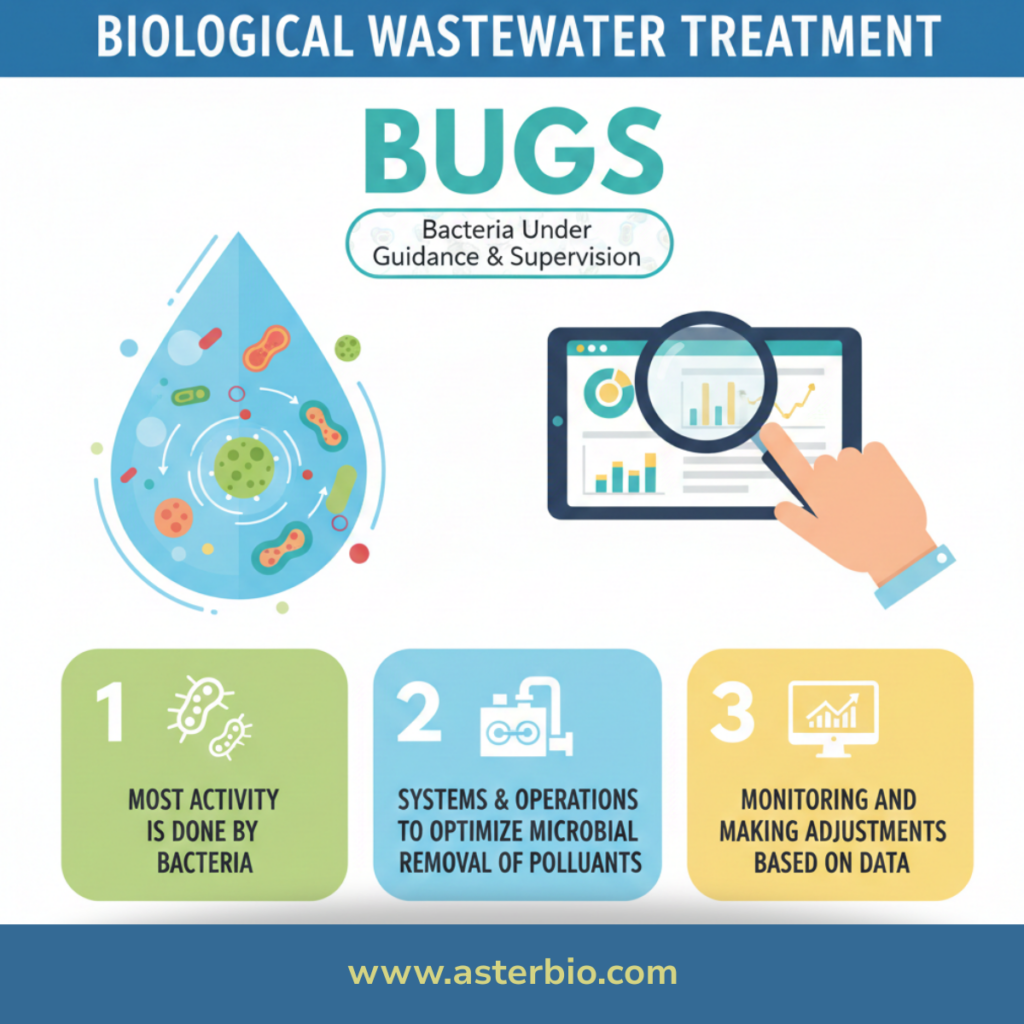
At its heart, wastewater treatment is a biological industry. We rely on a massive workforce of bacteria and microorganisms—affectionately known in the industry as “The Bugs”—to do the heavy lifting of removing pollutants and protecting our waterways.
However, as our treatment technology has evolved, so has our responsibility to manage these microscopic laborers. Here is why proactive monitoring is no longer just an “extra” task, but a vital necessity for successful operations.
Nature, Intensified
Nature has been cleaning water using microorganisms since the beginning of time. In a slow-moving stream or a rural lagoon system, these natural processes happen over weeks or months across large areas.
Modern wastewater plants essentially take these natural cycles and “intensify” them. We’ve moved from sprawling lagoons to high-tech, high-biomass systems like Activated Sludge, Membrane Bioreactors (MBR), and Anaerobic Digesters.
By concentrating a massive amount of “bugs” into a small footprint, we can treat millions of gallons of water in hours rather than weeks. But this intensity comes with a trade-off: stability.
More Workers, More Risk
Think of a lagoon like a large, slow-moving ship; it takes a long time to change course, but it’s also hard to tip over. A modern, high-biomass plant is more like a high-performance race car. It is incredibly efficient, but because the “biomass” (the concentration of microbes) is so high, things can go wrong very quickly.
- Oxygen Demand: In high-intensity aerobic systems, thousands of pounds of bacteria are breathing at once. A small drop in aeration can lead to a mass die-off in minutes.
- Food Ratios: If the “food” (influent pollutants) changes suddenly and the operator doesn’t adjust the “workers” (return activated sludge), the system can become unbalanced.
- Toxicity: High-biomass systems are more sensitive to “slug loads” or toxic shocks that can wipe out specialized bacterial populations.
Moving from Reactive to Proactive
In the old days of wastewater, operators often waited for a problem to appear—like cloudy effluent or rising sludge blankets—before taking action. In a modern plant, waiting for a visible problem means you’re already too late.
The key to successful operation lies in three pillars:
- Routine Monitoring: We must track the health of our workers. This includes regular monitoring dissolved oxygen (DO), pH, temperature, and nutrient levels. Additional advanced testing with newer tools including ATP, Microbial Community Analysis (MCA), and microscopic exam also generate valuable operational data.
- Trend Analysis: A single data point is just a snapshot. By looking at trends over days and weeks, operators can see “drifts” in performance. Is the sludge age creeping up? Is the settleability starting to degrade? Trends tell you where the plant is going, not just where it is.
- Periodic Operational Adjustments: Small, incremental changes—adjusting wasting rates, tweaking aeration cycles, or managing internal recycles—prevent the need for drastic, “emergency” interventions later.
The Bottom Line: Happy Bugs, Clean Water
Our wastewater plants are living ecosystems. When we monitor the data and make proactive adjustments, we aren’t just managing a facility; we are tending a massive, microscopic garden.
By respecting the intensity of modern systems and giving our “bugs” exactly what they need to thrive, we ensure consistent effluent quality, stay in compliance, and protect the environment we all share.